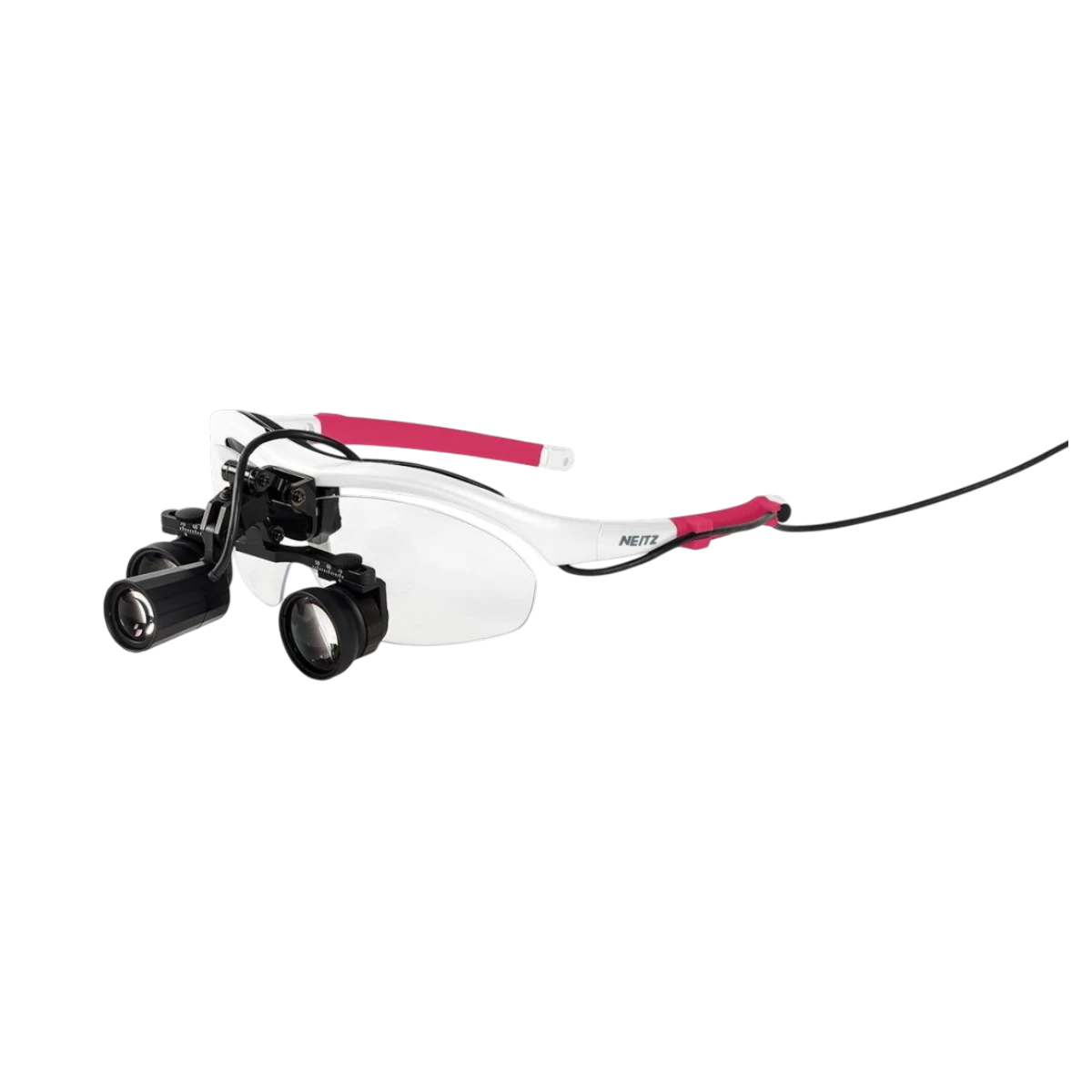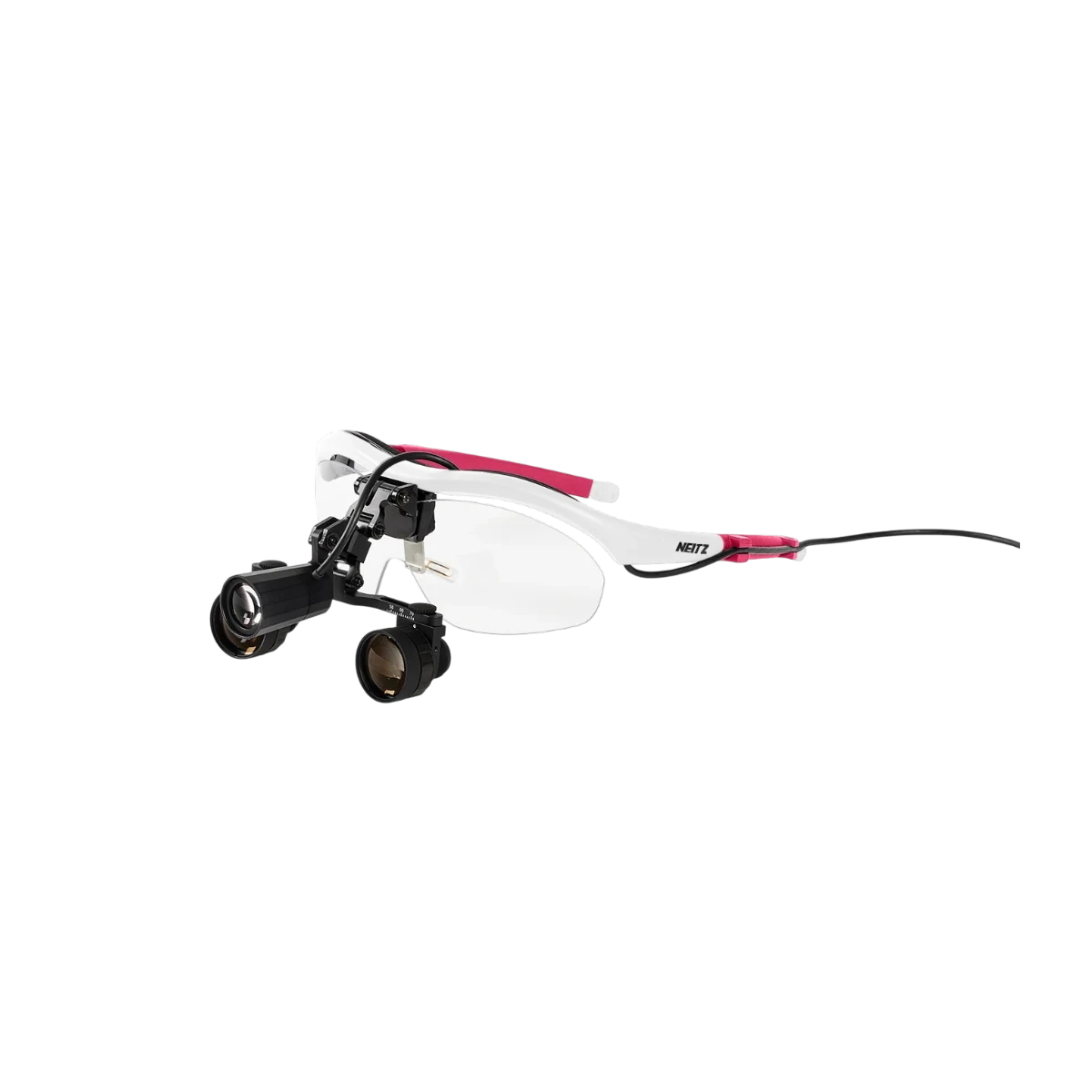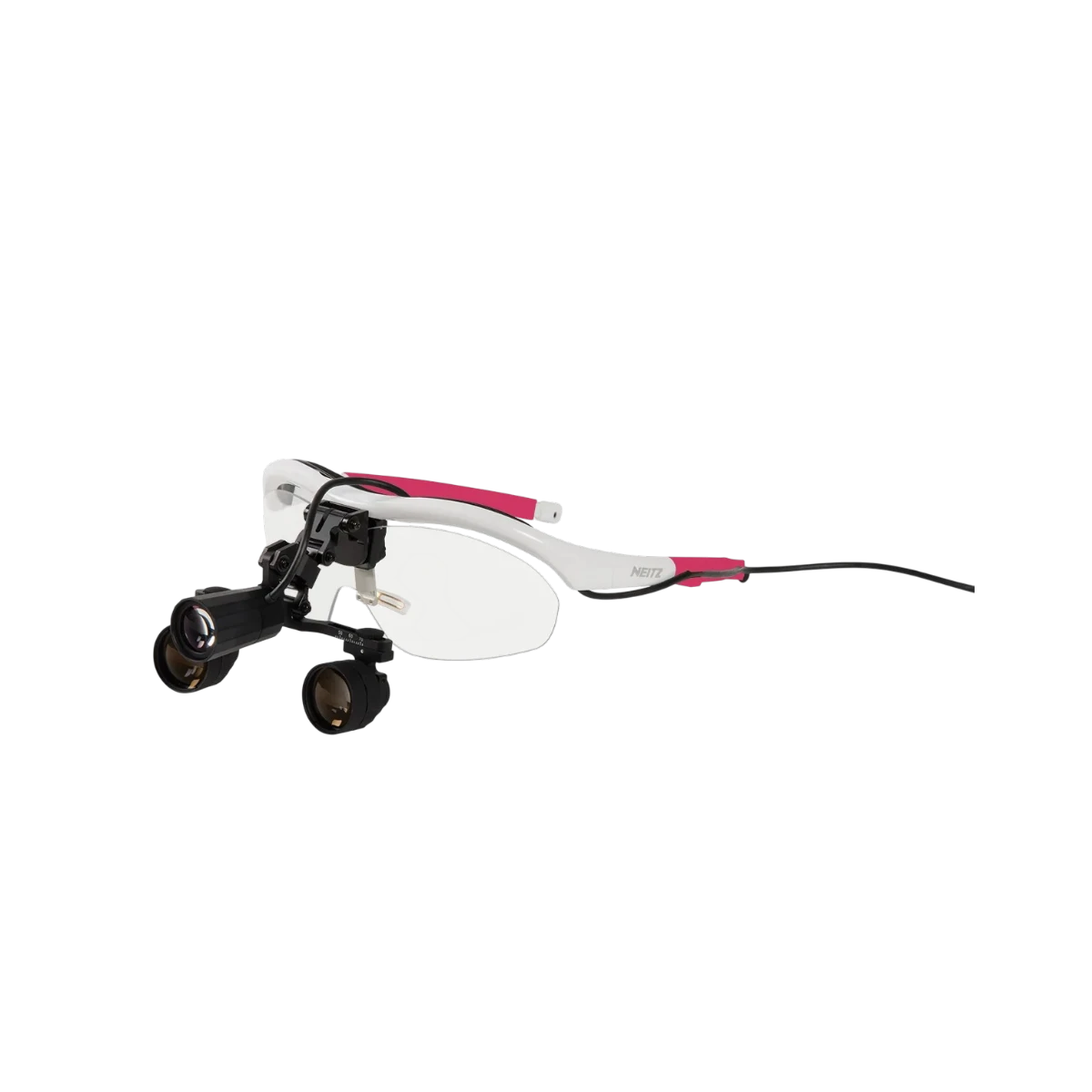













Even with the best magnification loupe, if light does not reach the field, detail is lost. And the problem is not a lack of lamps in the operating room or the clinic: it is that the professional themselves, leaning over the patient, casts a shadow precisely where they need to see. The closer they get, the worse it becomes.
Integrated illumination solves this through geometry. By mounting directly onto the same frame as the loupe, the light travels aligned with the line of sight: it illuminates exactly where the user is looking and casts no shadow of its own, because the light source follows the movement of the head. There is no need to reposition anything or ask anyone to adjust the focus.
Added to this are the advantages of the binocular loupe: stereoscopic vision with true depth perception and an upright posture, without hunching over the field. When choosing a loupe, in addition to magnification, working distance, and weight, it is worth paying attention to color temperature—a neutral or cool light reproduces tissue more accurately—and to battery life, which must cover a full working day without the need for replacements mid-procedure.