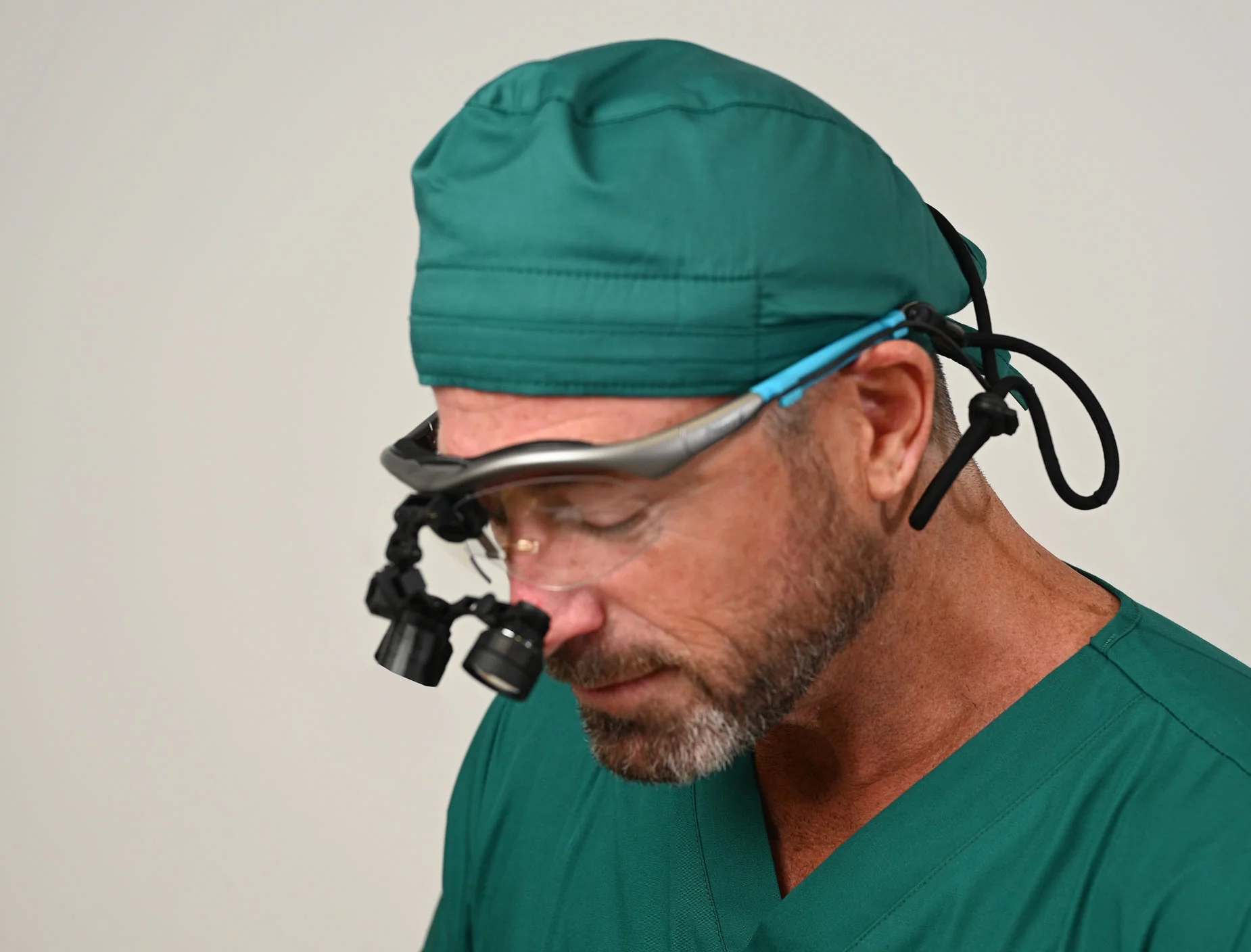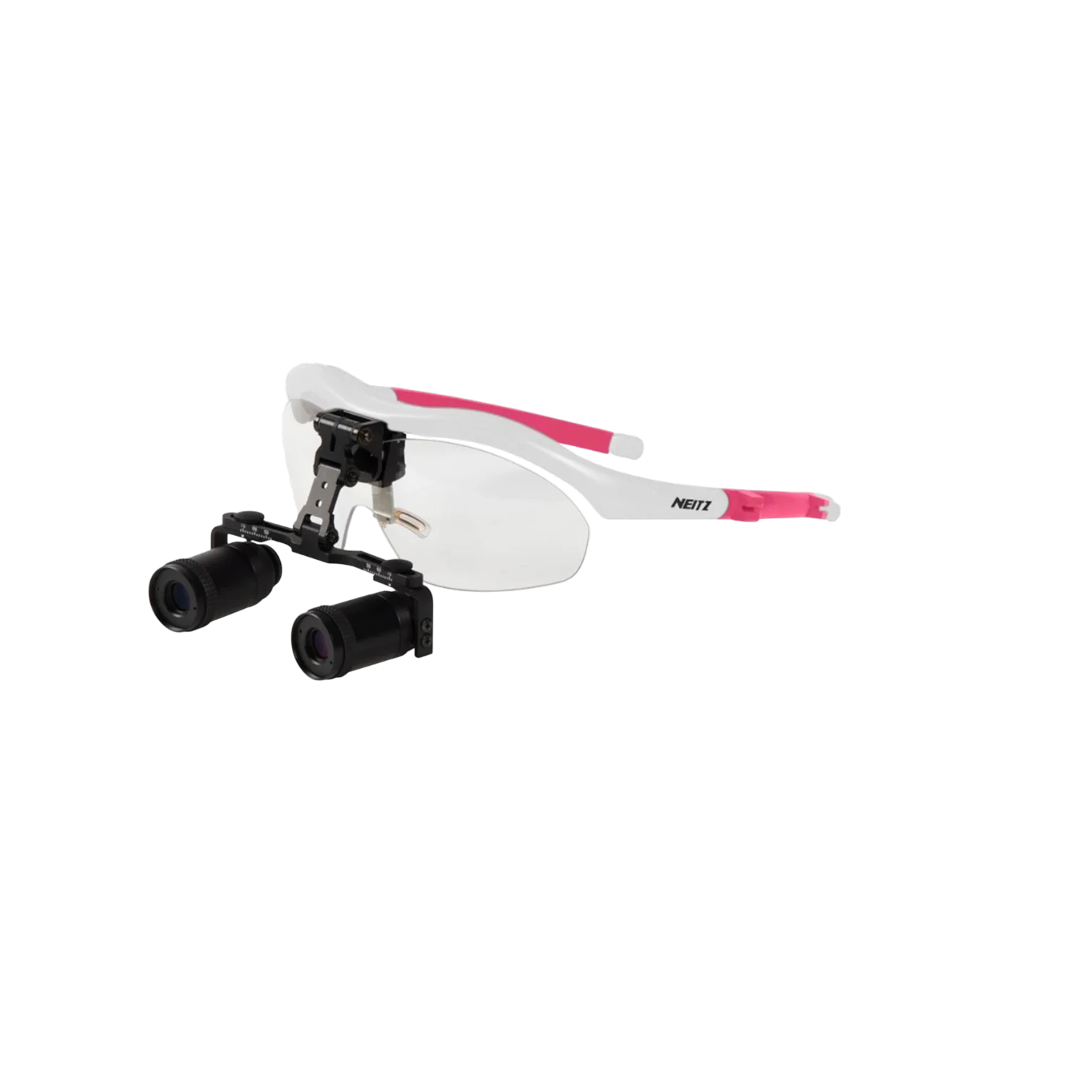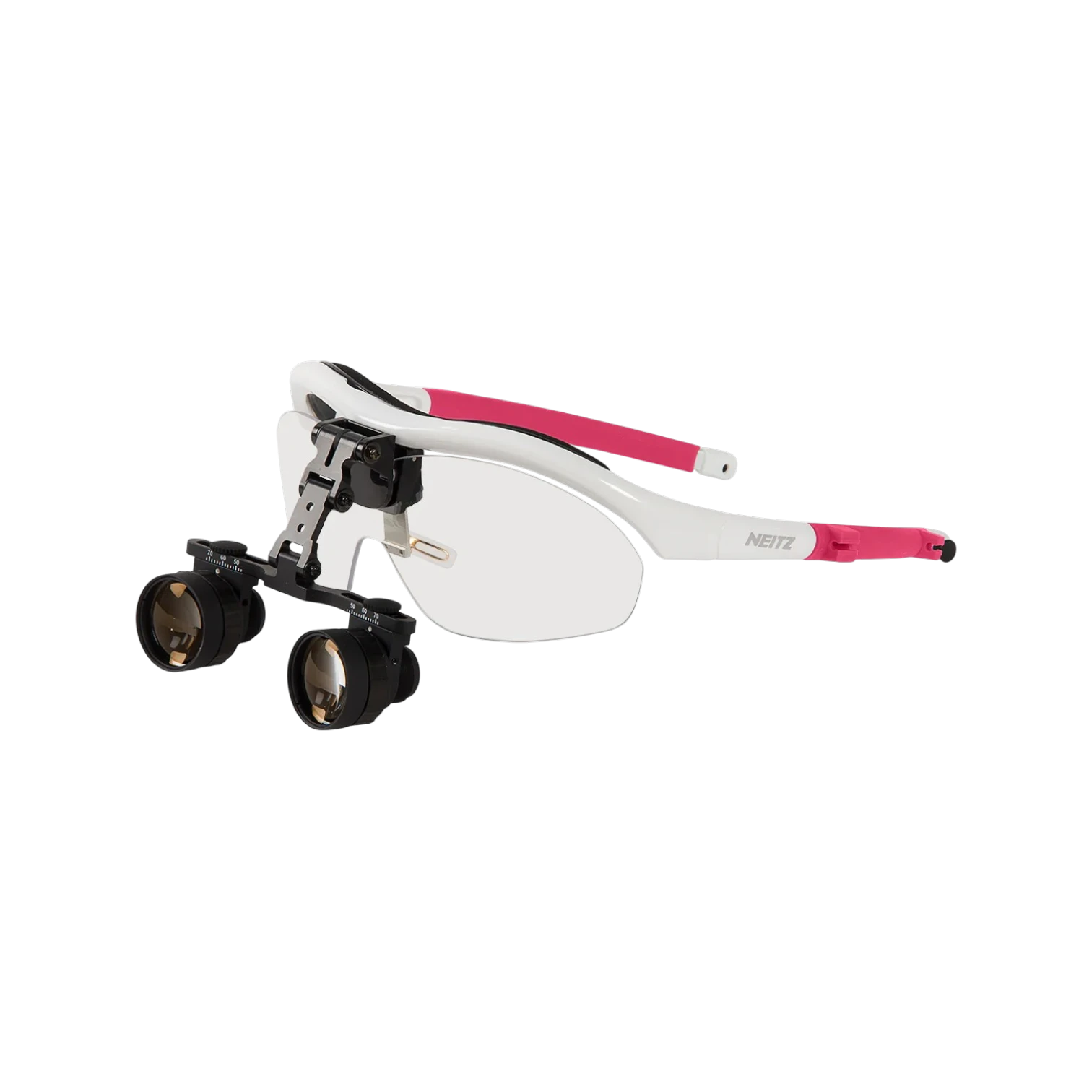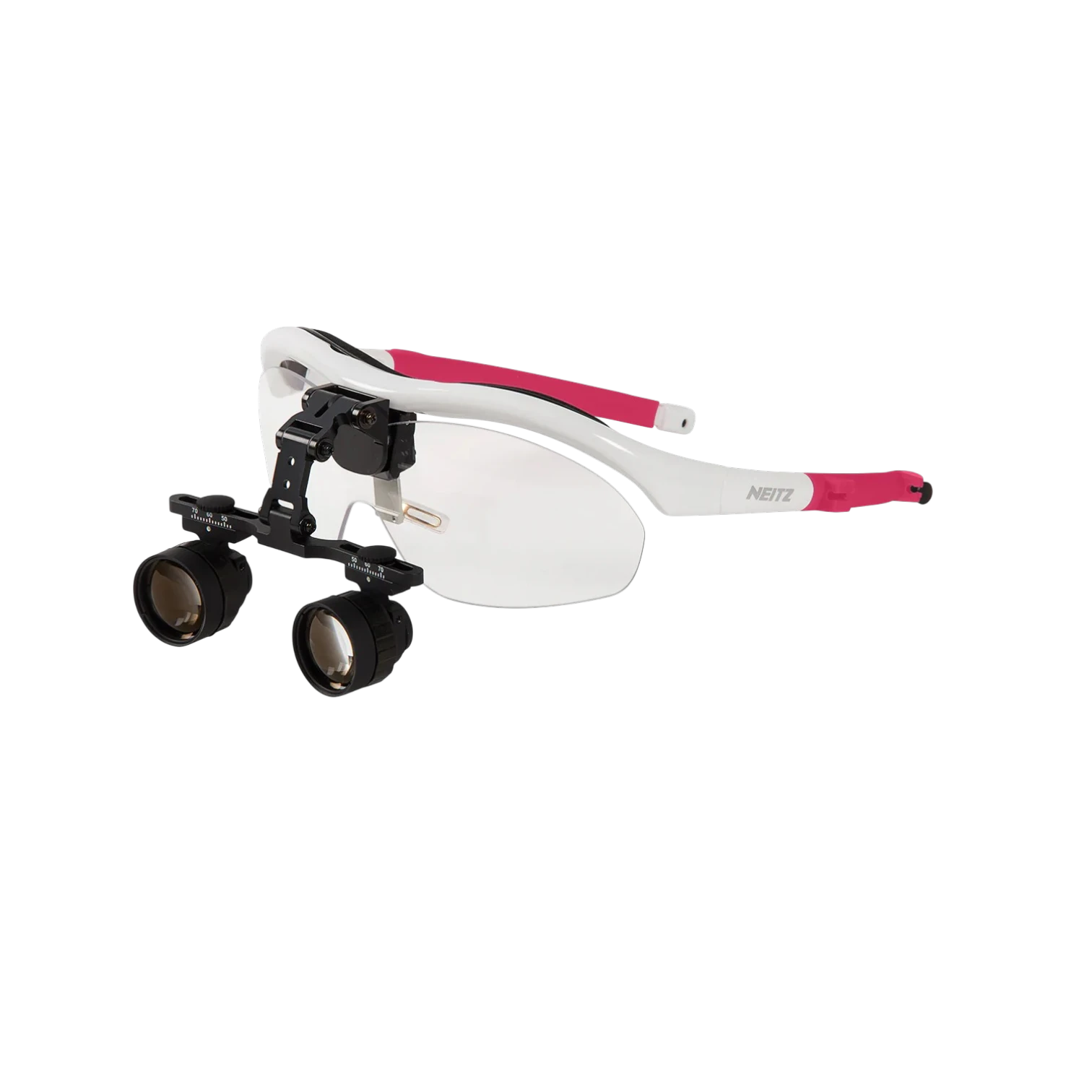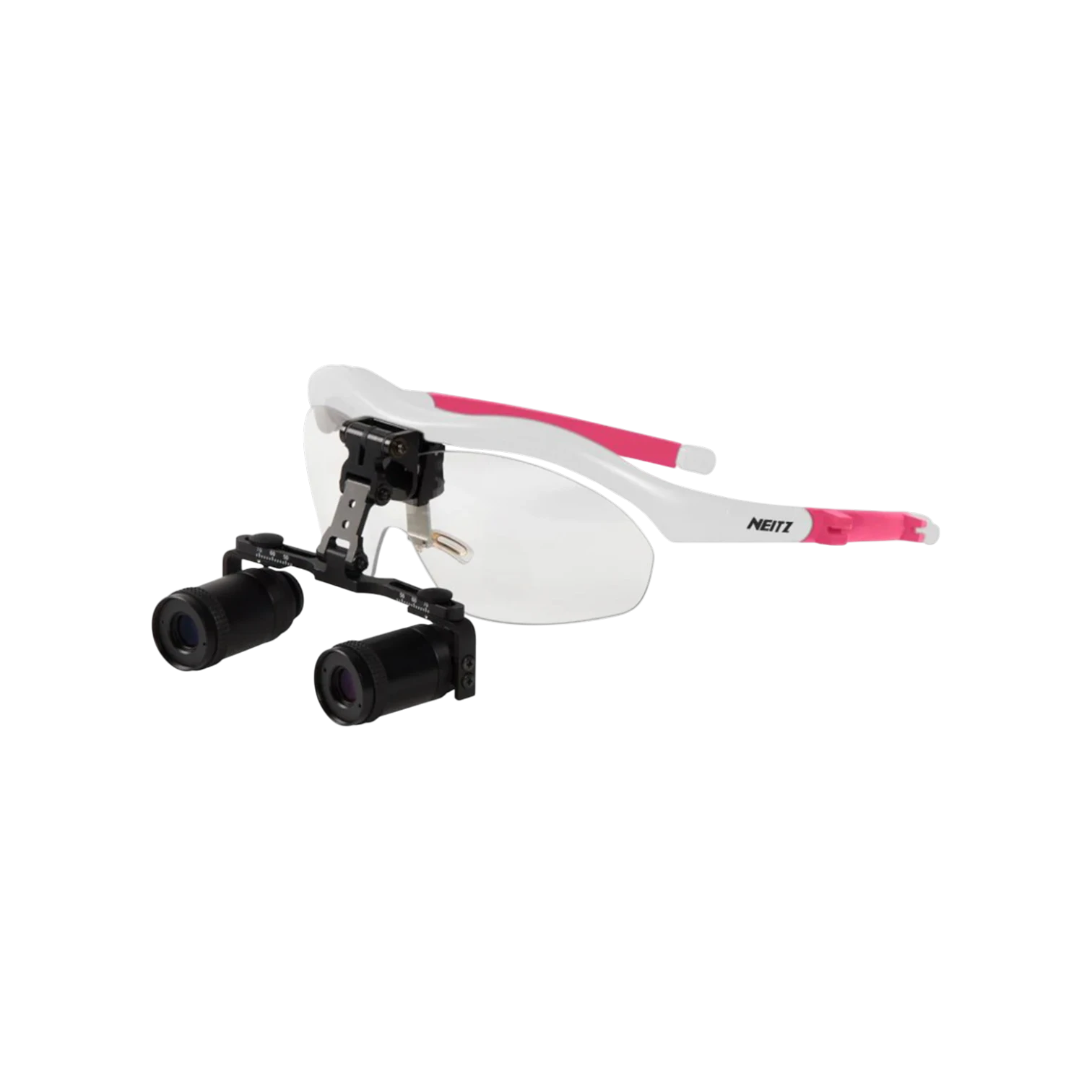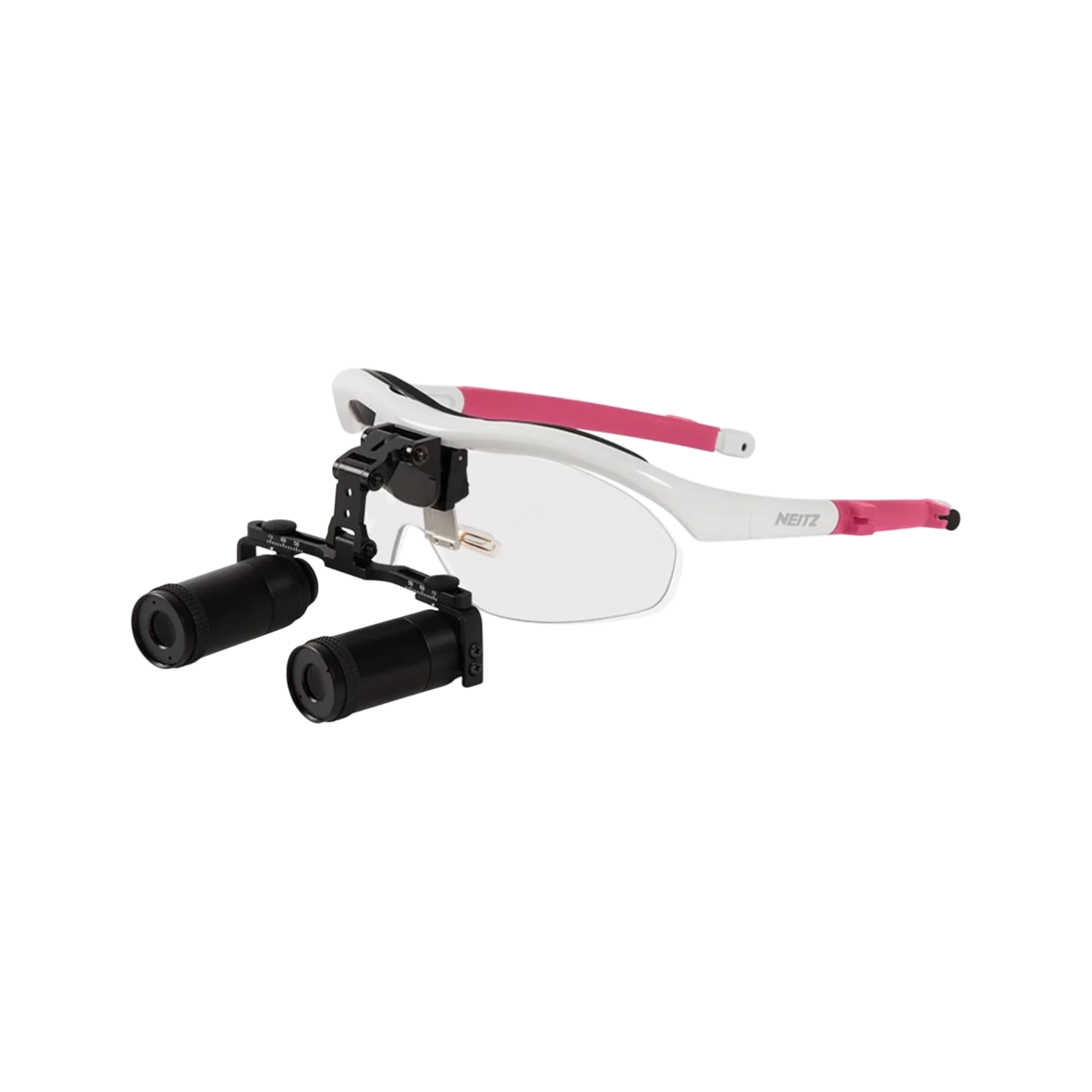

















In ophthalmic surgery and clinical practice, what cannot be seen in detail cannot be treated with precision. The binocular loupe expands the working field and, most importantly, does so in stereoscopic vision: the practitioner retains depth perception — something no monocular lens can offer and that becomes indispensable when working on millimeter-scale structures.
The benefit is not purely optical; it is also postural. Without loupes, one instinctively leans toward the field, hunches the neck, and holds that position for hours. With a properly fitted loupe — adjusted to the working distance and interpupillary distance of each user — the head remains upright and the field reaches the eye with full clarity. It is the difference between ending the day fatigued and ending it with chronic cervical pain.
When selecting a loupe, three parameters take precedence: magnification (the higher the magnification, the narrower the field and the shallower the depth of focus — so more is not always better), working distance, which must correspond to the practitioner’s actual working posture, and weight, because a heavy frame becomes unbearable by the third hour. The right choice is the one the user forgets they are wearing.