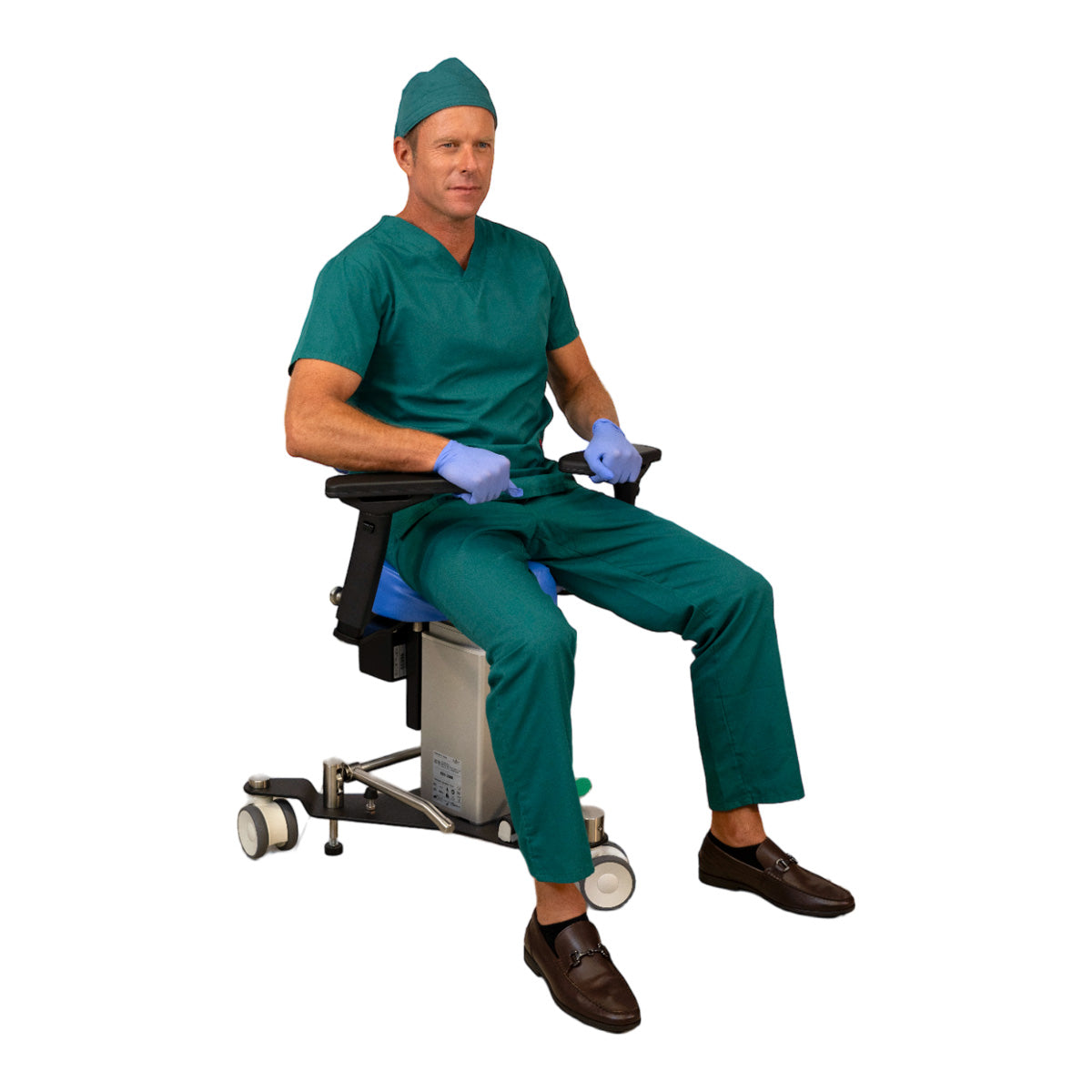


















Anterior segment surgery lasts between ten and thirty minutes, but a full operating day adds up to several hours with the surgeon seated, motionless, eyes fixed to the microscope and hands under sustained tension. The chair is what supports that posture. If it forces a forward lean, if the backrest fails to follow the lumbar curve, or if the height does not align precisely with that of the operating table, fatigue sets in earlier and precision suffers during the last procedure of the day.
An ophthalmic surgical chair requires smooth, vibration-free height adjustment — ideally foot-operated, so the sterile field need not be released — along with locking casters, an adjustable backrest, and a stable base that does not shift with the surgeon’s movements. Above all, its height range must be compatible with that of the operating table: chair and table are chosen as a matched set, not independently. When both pieces of equipment work along the same ergonomic axis, the surgeon reaches the end of the day with the same steadiness of hand as at the beginning.